Designing trust in subscription flows: Tidal vs Spotify
A comparison of how two music platforms use words to shape trust, reduce uncertainty and influence subscription decisions.
Subscription trials are not just conversion flows, they are trust flows. Users are asking: What am I agreeing to? When will I be charged? How easy is cancellation? What am I committing to?
The difference between a smooth signup and a hesitant one comes down to how clearly these questions are answered.
Entry point message
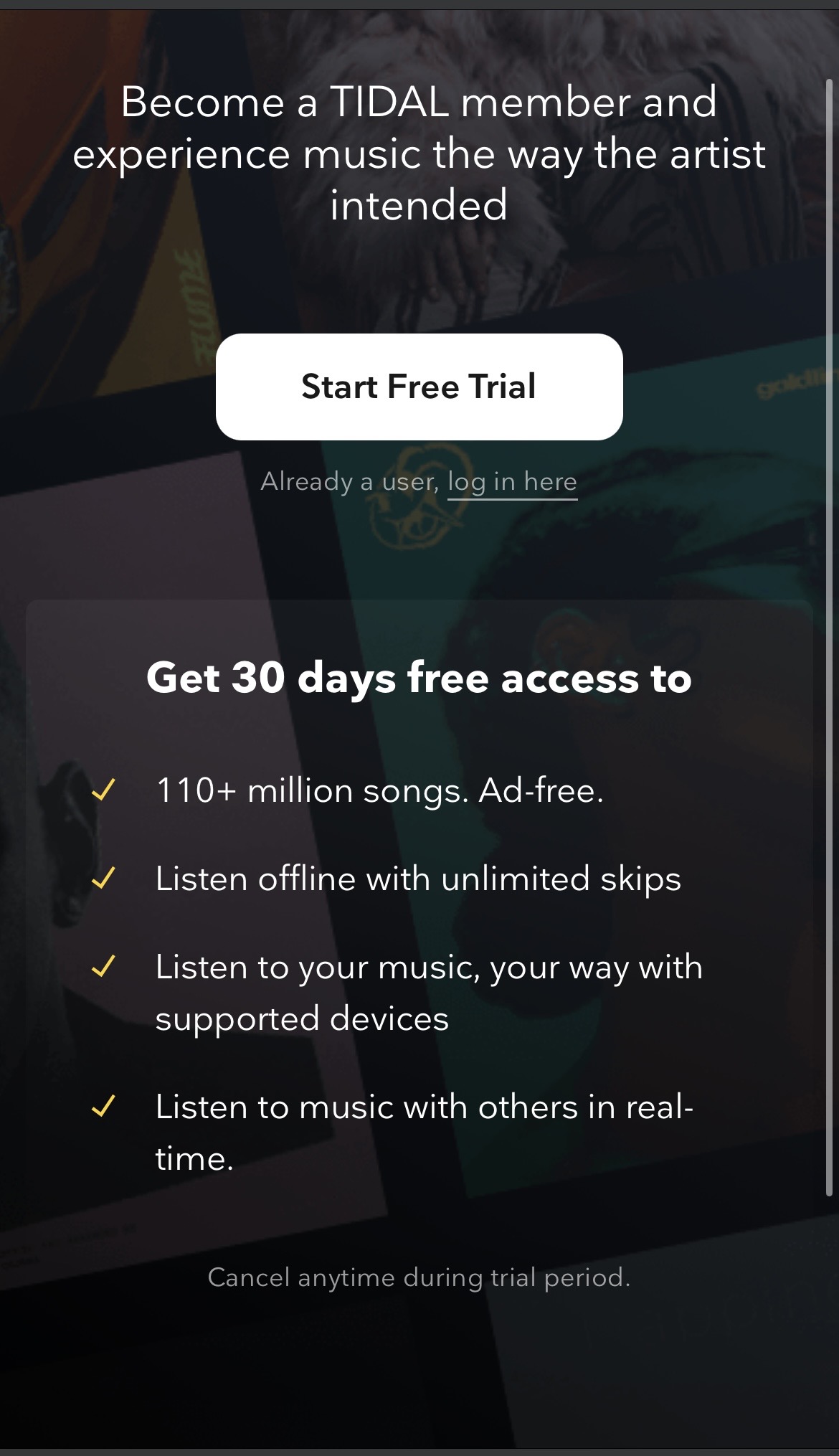
Positioning before explanation. The headline “Become a TIDAL member and experience music the way the artist intended” focuses on brand positioning rather than user value. It tells users what Tidal believes about itself, not what the user gets.
Generic CTA language. “Start Free Trial” lacks specificity:
- No mention of price after trial
- No reminder of cancellation
- No reassurance
It asks for action before reducing risk.
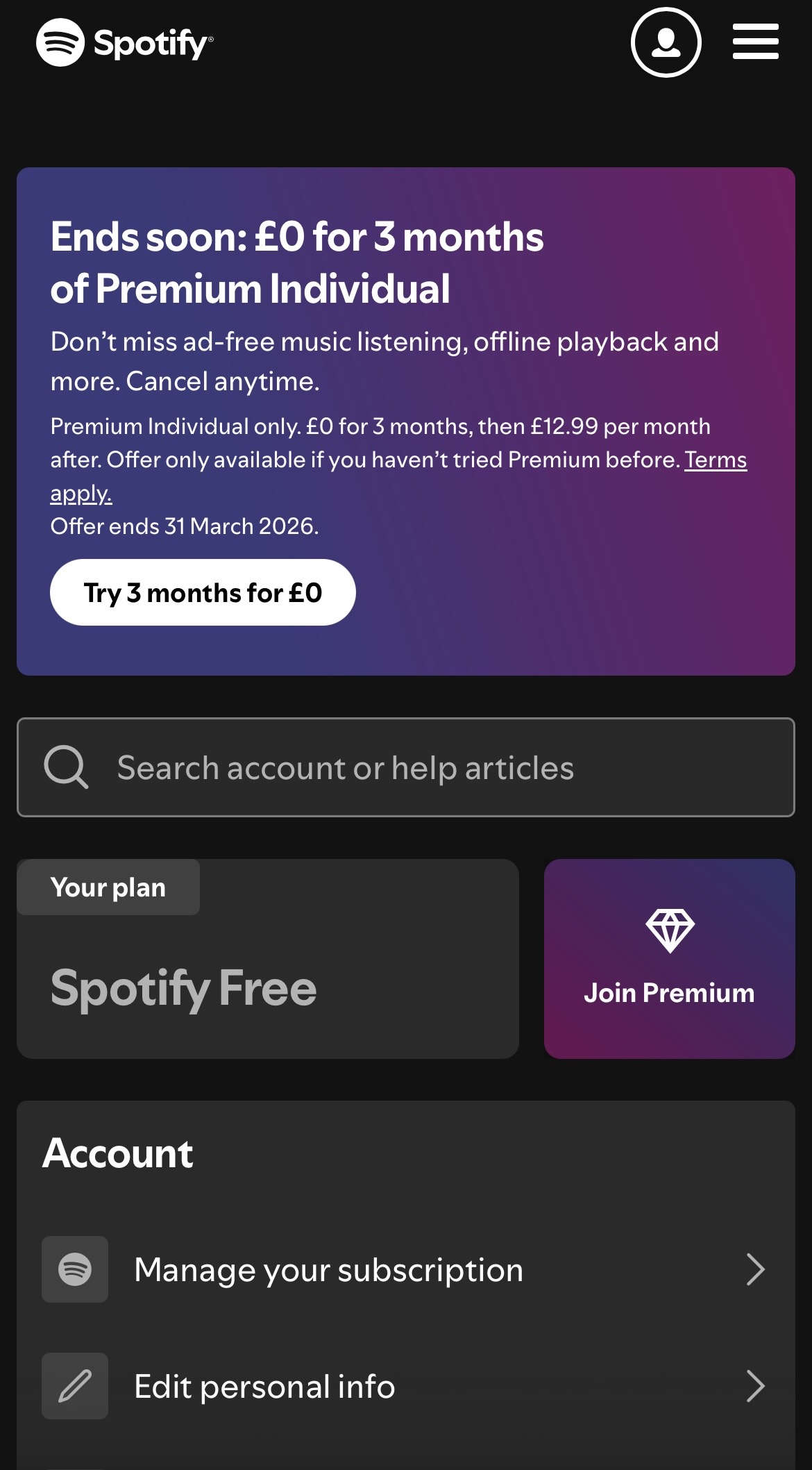
Specifics before slogans. Spotify leads with price, duration, future cost and deadline. This answers the user’s main fear immediately: “What will this cost me?”
CTA reinforces value. “Try 3 months for £0” repeats the offer rather than using a generic verb. This reduces ambiguity.
Spotify shows exact price, exact date and exact future charge.
Tidal leads with brand positioning before addressing user risk.
Spotify is selling “this is safe to try.”
Plan selection / payment screen
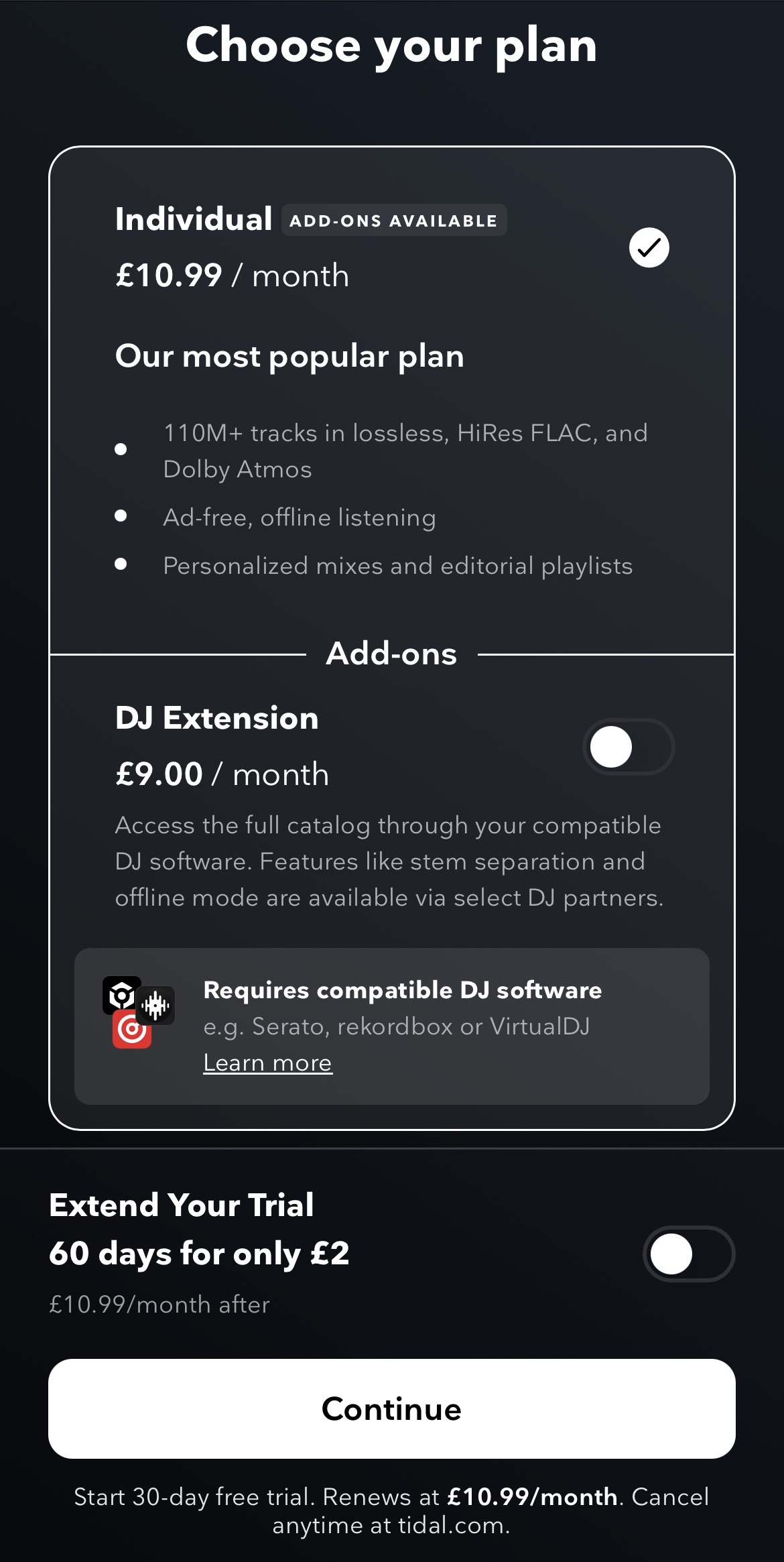
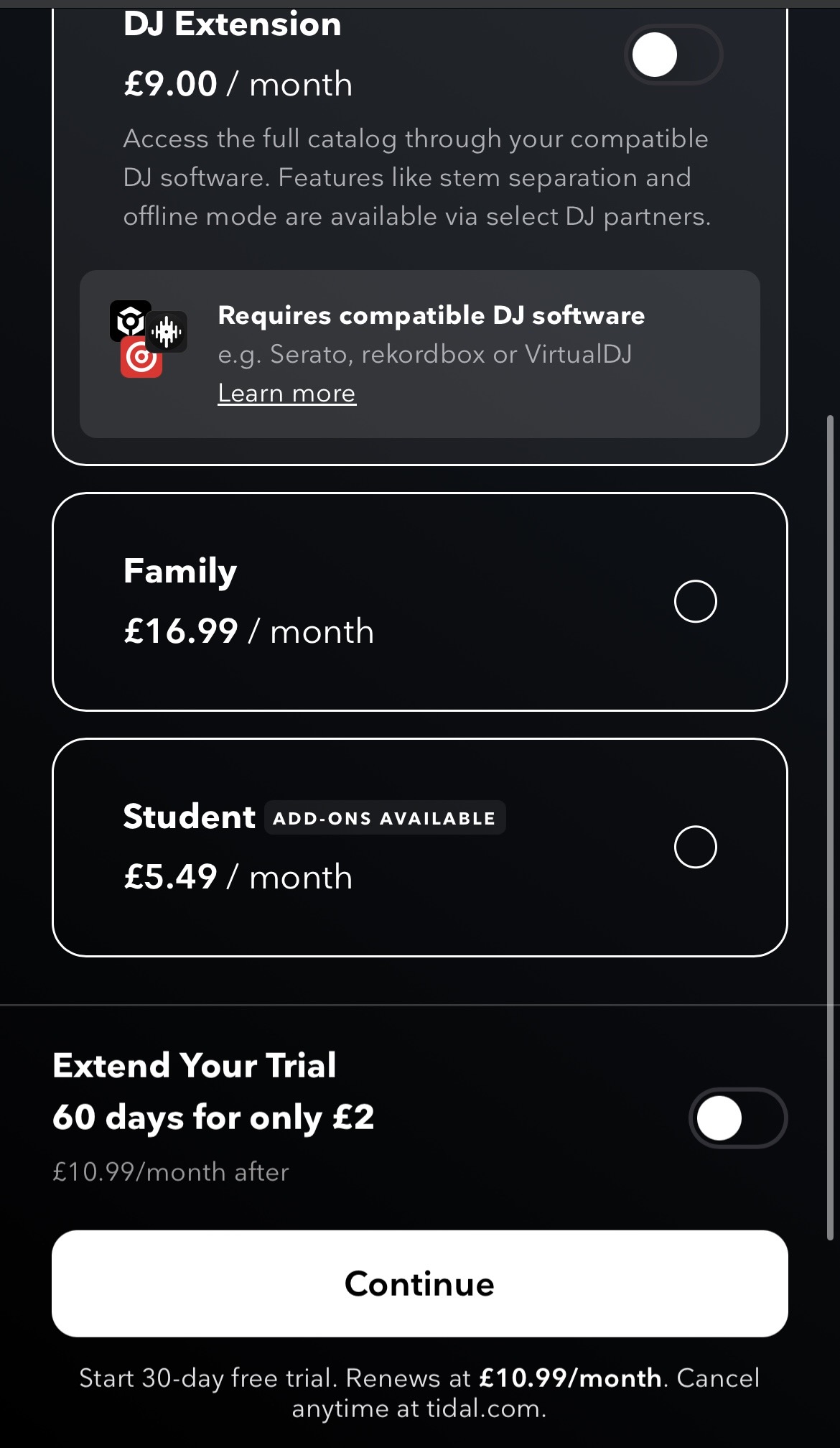
Decision complexity is introduced too early. Before they even start the trial, users must process: base plan, add-ons, extensions and eligibility.
Add-ons create noise. DJ Extension is irrelevant for most users but competes for attention. This increases decision friction.
Trial extension is framed as upsell. “Extend your trial – 60 days for £2” introduces payment thinking during what should feel like a free experience. It weakens the psychological safety of “free trial”.
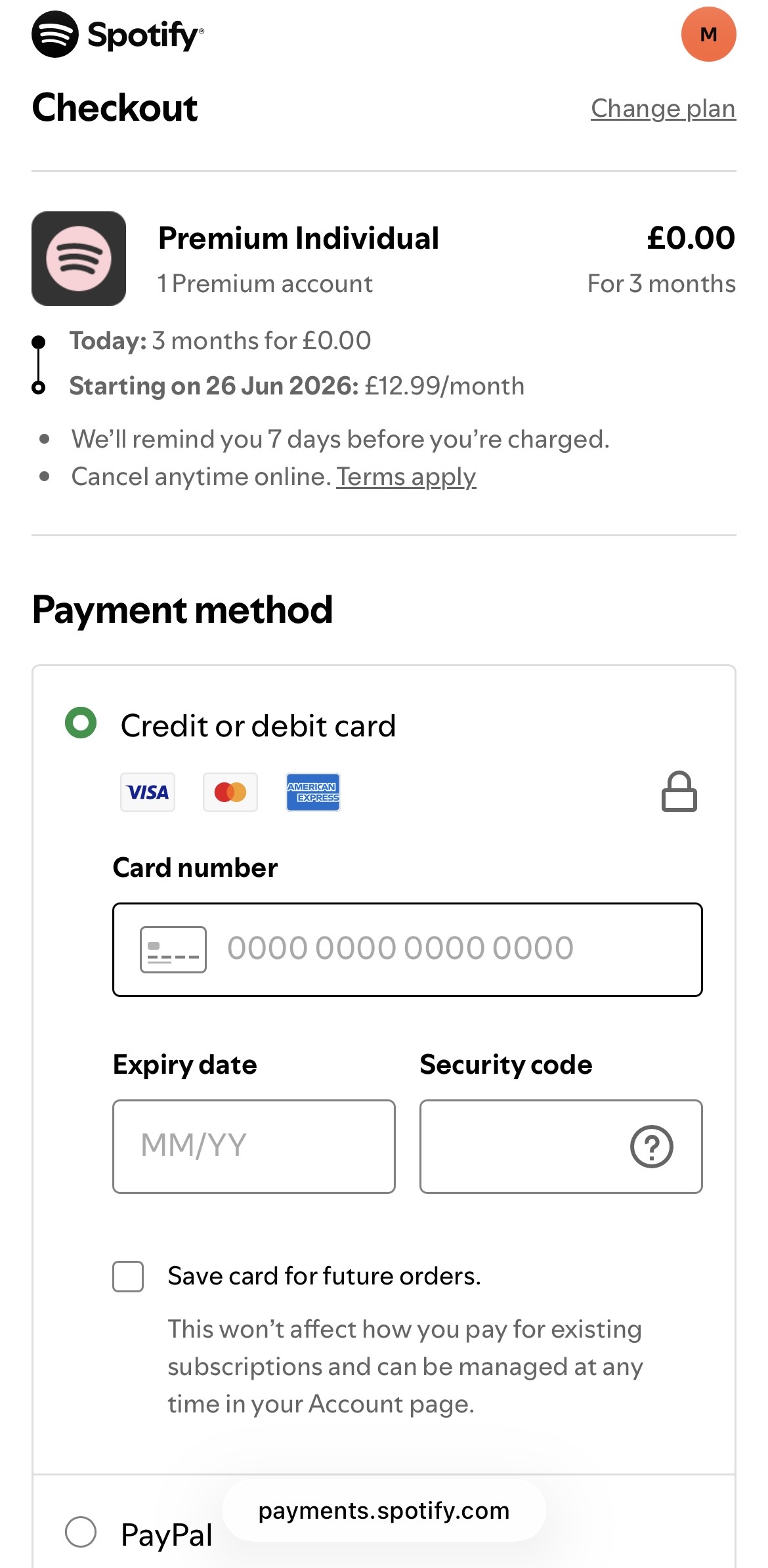
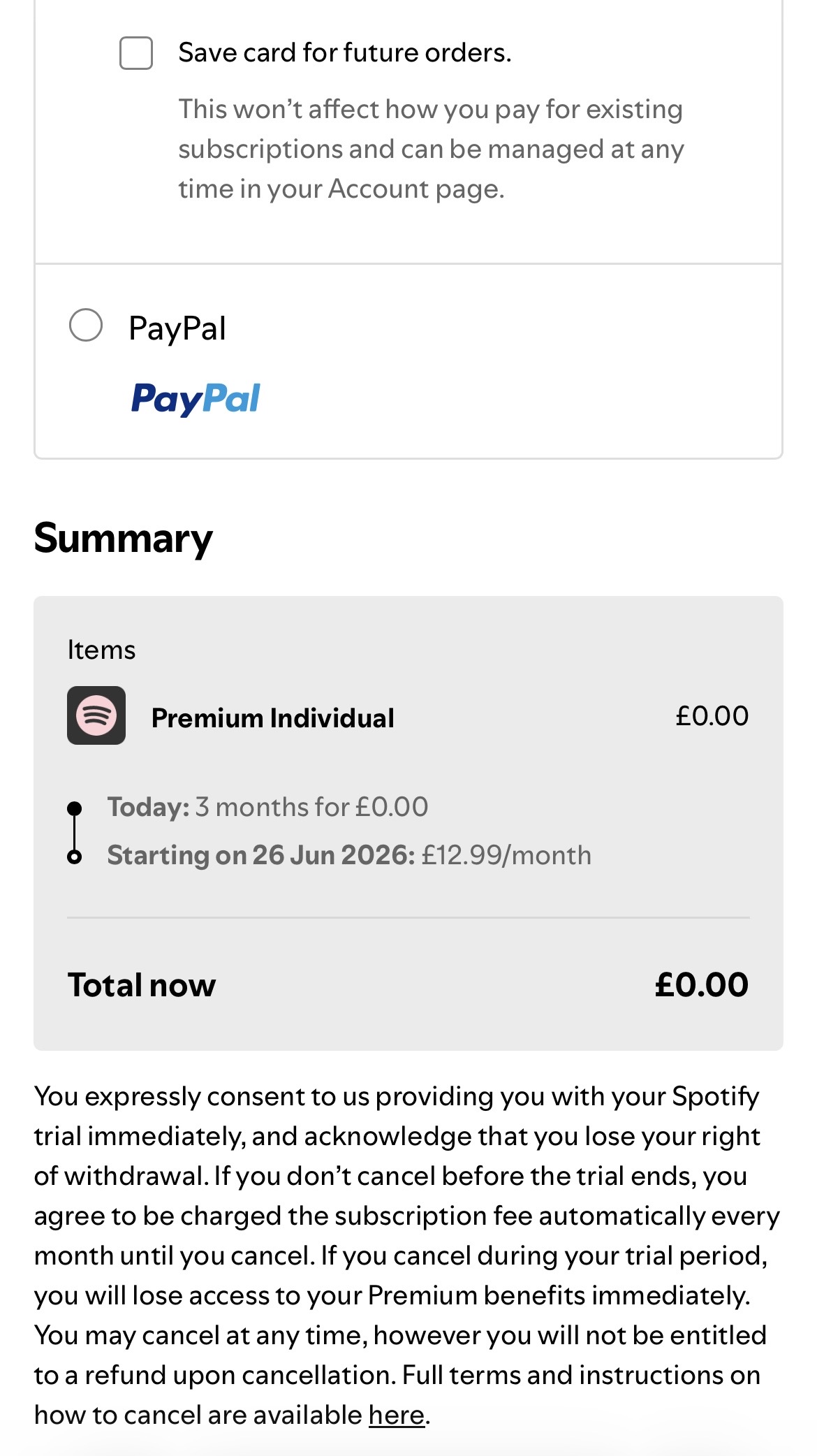
Focused decision. Spotify keeps the trial limited to Premium Individual, which was already stated on the entry screen. This removes the need to compare plans during signup.
The payment screen reinforces clarity with concrete timelines:
- Today: 3 months for £0.00
- Starting on 26 Jun 2026: £12.99/month
- We’ll remind you 7 days before you’re charged
- Cancel anytime
Replaces uncertainty with predictability. Clear dates and pricing remove the need for users to calculate when charges begin.
Spotify uses specificity and reassurance to make the decision feel safe, removing hesitation.
Legal language: obligation vs clarity of commitment
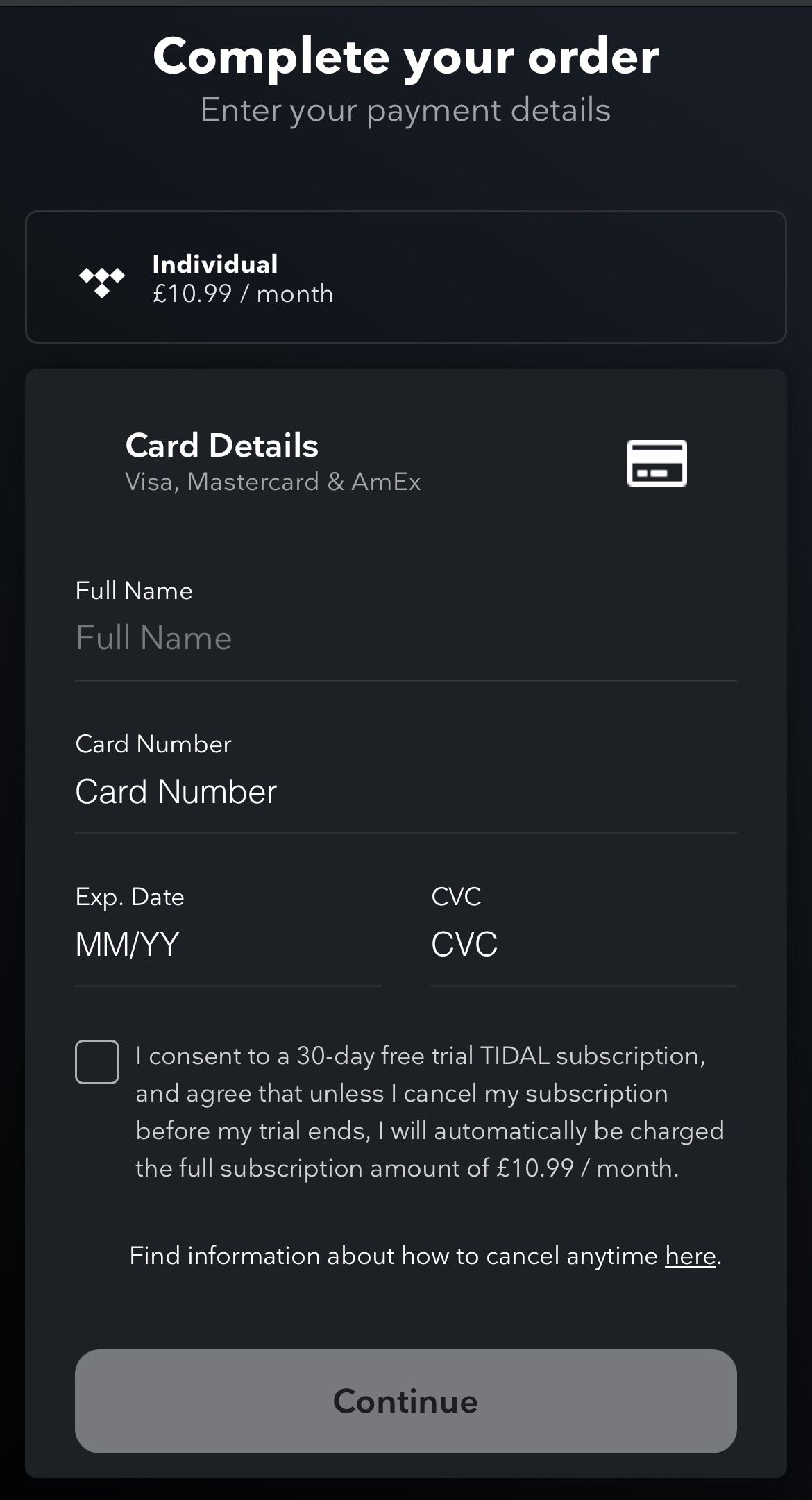
Simple but obligation-focused. “I consent to a 30-day free trial TIDAL subscription… unless I cancel… I will automatically be charged…”
The language is direct and easy to follow, but frames the agreement around what happens if the user fails to act.
Legally thorough but intimidating. “You expressly consent…” “You lose your right of withdrawal…” “You will not be entitled to a refund…”
Spotify provides more complete legal coverage, but introduces formal legal phrasing that may increase perceived commitment risk.
Both companies prioritise legal protection, but neither fully translates the legal meaning into user-friendly language. Below is an example of a more user-friendly legal disclaimer from Netflix.
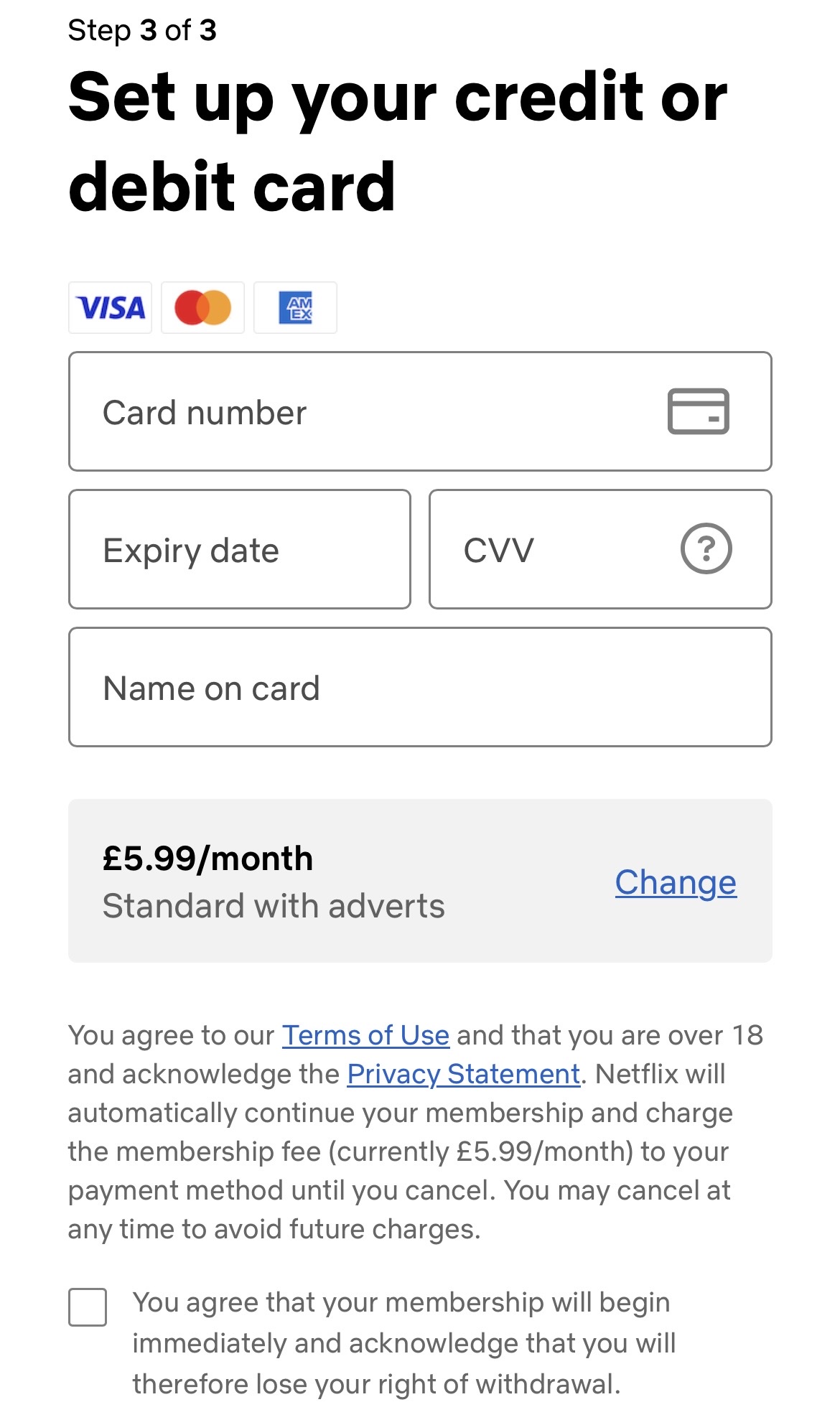
Netflix explains what happens before stating legal consequences.
“Netflix will automatically continue your membership and charge the membership fee (currently £5.99/month) to your payment method until you cancel.”
This makes the agreement feel understandable rather than contractual.
Netflix uses action verbs users already understand, which reduces intimidation:
continue · charge · cancel · avoid
consent · expressly agree · acknowledge · entitled · withdrawal
Netflix embeds reassurance inside the legal text: “You may cancel at any time to avoid future charges.”
Netflix separates legal detail into a checkbox: “You acknowledge that you will therefore lose your right of withdrawal.”
This is easier to process than when it sits in the primary reading flow.
Legal clarity is necessary, but legal tone can increase hesitation. The strongest writing explains commitment in plain language, with legal detail supporting rather than leading the message. As Netflix shows, legal compliance does not require a legal tone.